A designer-approved roundup of the warm beiges, greiges, and soft taupes that turn cold, flat walls into a space that feels like a hug the moment you walk in.
If you’ve ever painted a room a trendy gray only to have it turn cold, blue, or downright depressing the second the sun went down, you already understand the quiet magic of a warm neutral. These are the shades that wrap a room in soft, golden comfort without screaming for attention — the paint colors designers reach for when they want a home to feel lived-in, layered, and effortlessly inviting.
Sherwin Williams makes some of the most beloved warm neutrals on the market, and the best part is that “warm neutral” doesn’t mean boring builder-beige anymore. Today’s warm neutrals range from creamy off-whites to rich greiges to earthy, depth-filled taupes — all flexible enough to work in nearly any room, in nearly any home style, from coastal cottage to modern farmhouse to cozy traditional.
In this guide, I’ve rounded up 17 of the coziest Sherwin Williams warm neutrals, complete with their LRV, undertones, where each one shines, and how to style it. Whether you’re color-drenching a whole home or just freshening up one tired room, there’s a perfect cozy neutral on this list waiting for you.
📌 Save This for Later
Pin this post to your Home Paint Colors board so you can find your perfect warm neutral when you’re ready to grab samples.
What Makes a Paint Color a “Warm Neutral”?
A warm neutral is a soft, understated color — think beige, greige, taupe, or creamy white — that carries warm undertones like yellow, orange, gold, brown, or red rather than cool ones like blue or violet. That hint of warmth is what makes a room feel snug and welcoming instead of stark or clinical.
Two things matter most when you’re choosing one:
LRV (Light Reflectance Value) tells you how light or dark a color reads, on a scale from 0 (pure black) to 100 (pure white). A higher LRV reflects more light and keeps a room feeling open and airy; a lower LRV adds cozy depth. Most of the colors on this list fall between 45 and 75.
Undertones are the secondary colors hiding inside a neutral that reveal themselves depending on your lighting and the finishes around them. This is exactly why you should always sample a color in your own space before committing — a beige that looks perfect in a south-facing kitchen can turn muddy in a dim north-facing den.
The 17 Cozy Warm Neutrals
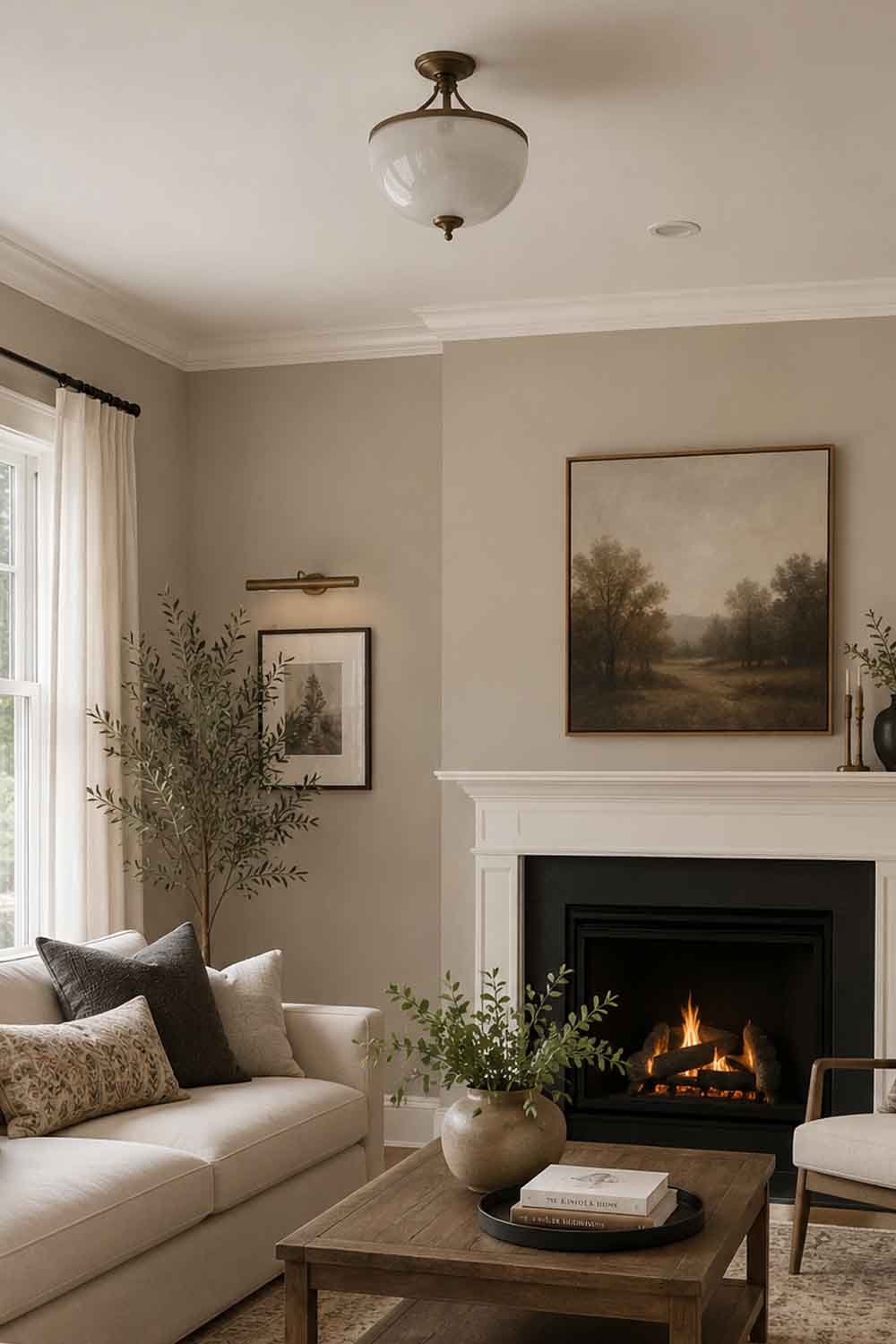
Accessible Beige (SW 7036)
If there’s one color designers reach for again and again, it’s Accessible Beige. It’s a warm greige — beige softened with just enough gray to keep it from feeling dated, yet warm enough to never read cold. Architects sometimes call it “the peacemaker” because it’s the perfect compromise between a cool modern gray and a traditional beige.
It’s incredibly versatile, holding up beautifully in mixed lighting, which is why it’s a go-to whole-home neutral. Pair it with crisp white trim like Pure White or Alabaster and warm wood or brass accents for an inviting, timeless look.
Agreeable Gray (SW 7029)
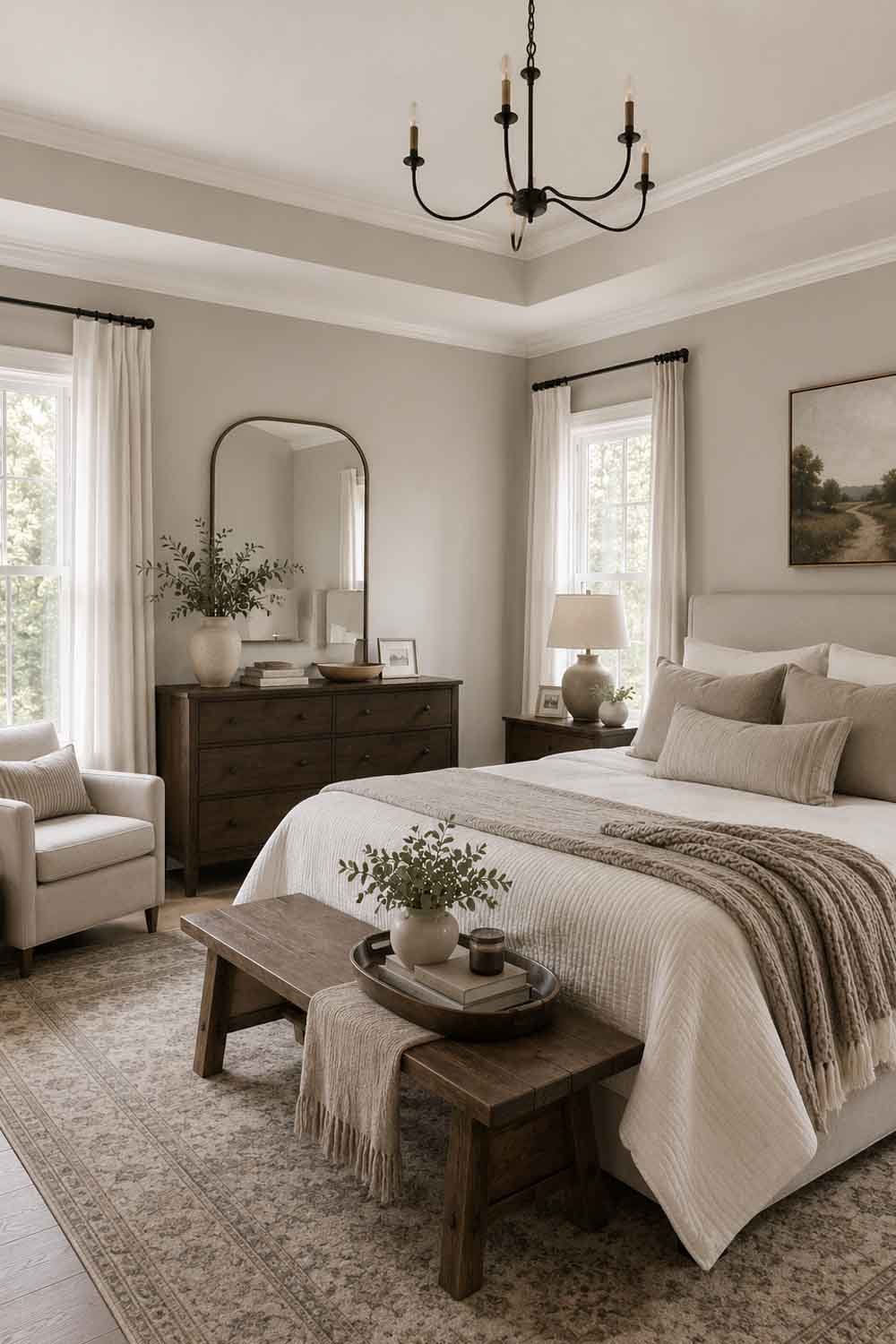
You can’t make a warm-neutral list without Agreeable Gray — one of the most popular paint colors in the country, and for good reason. It’s a gray that’s been warmed up: a true greige that never feels too cool or too warm, making it endlessly flexible across home styles.
It leans slightly more “gray-centric” than Accessible Beige and reads a touch lighter, so if you love the greige idea but want something a bit airier, this is your color. It’s a safe bet that still feels stylish. Pair it with Pure White trim for a clean, modern finish.
Natural Linen (SW 9109)
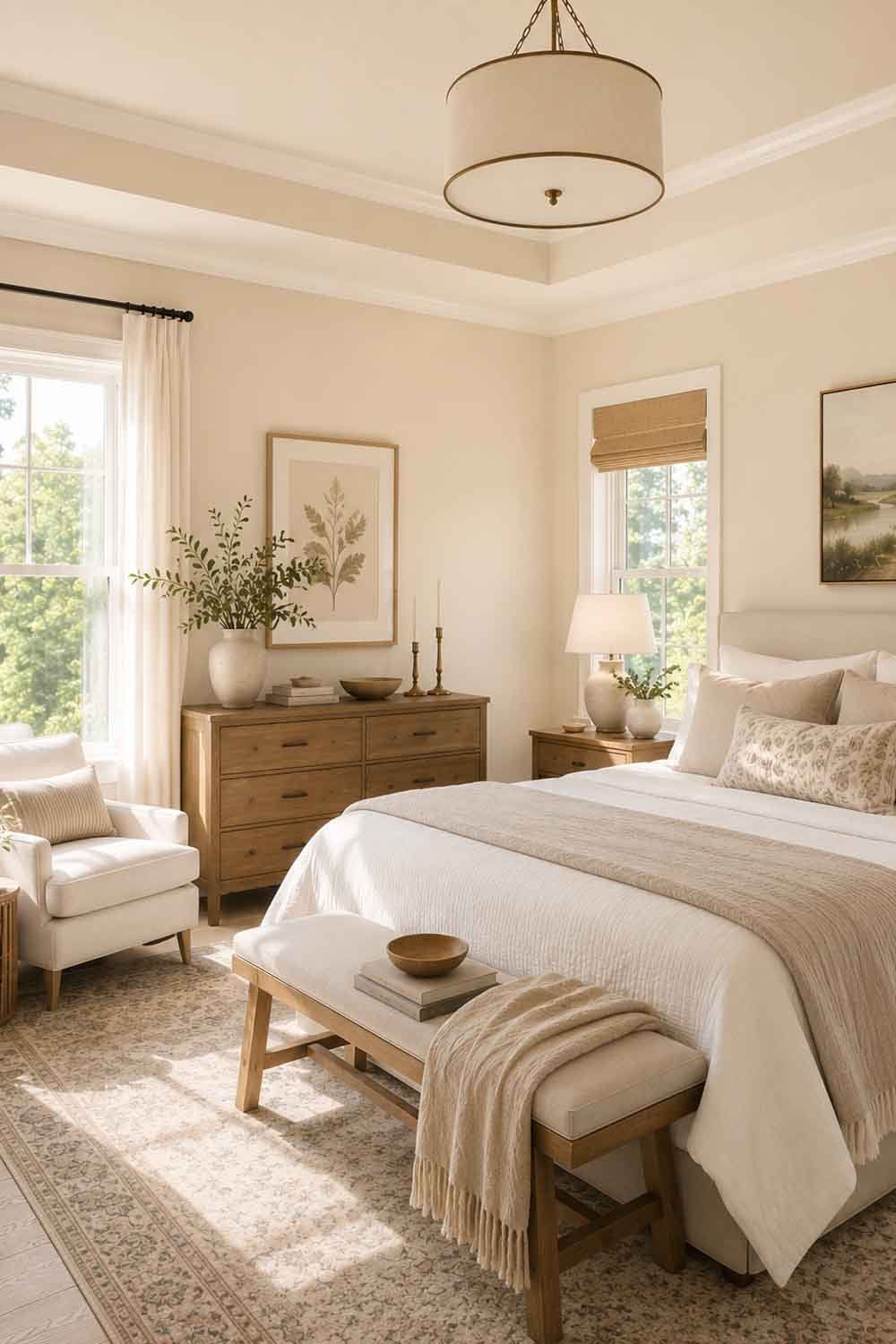
Natural Linen is like your favorite linen dress in paint form — light, warm, and softly creamy. It’s a more modern beige, free of the heavy golden tone of early-2000s Tuscan beiges and lighter than the tans of the ’90s.
With an LRV of 66, it’s a touch brighter than Accessible Beige and can pick up a soft golden glow in bright light. Its warmth helps balance cool, north-facing light, keeping a space from feeling sterile. It shines brightest in sunny, well-lit rooms.
Kilim Beige (SW 6106)
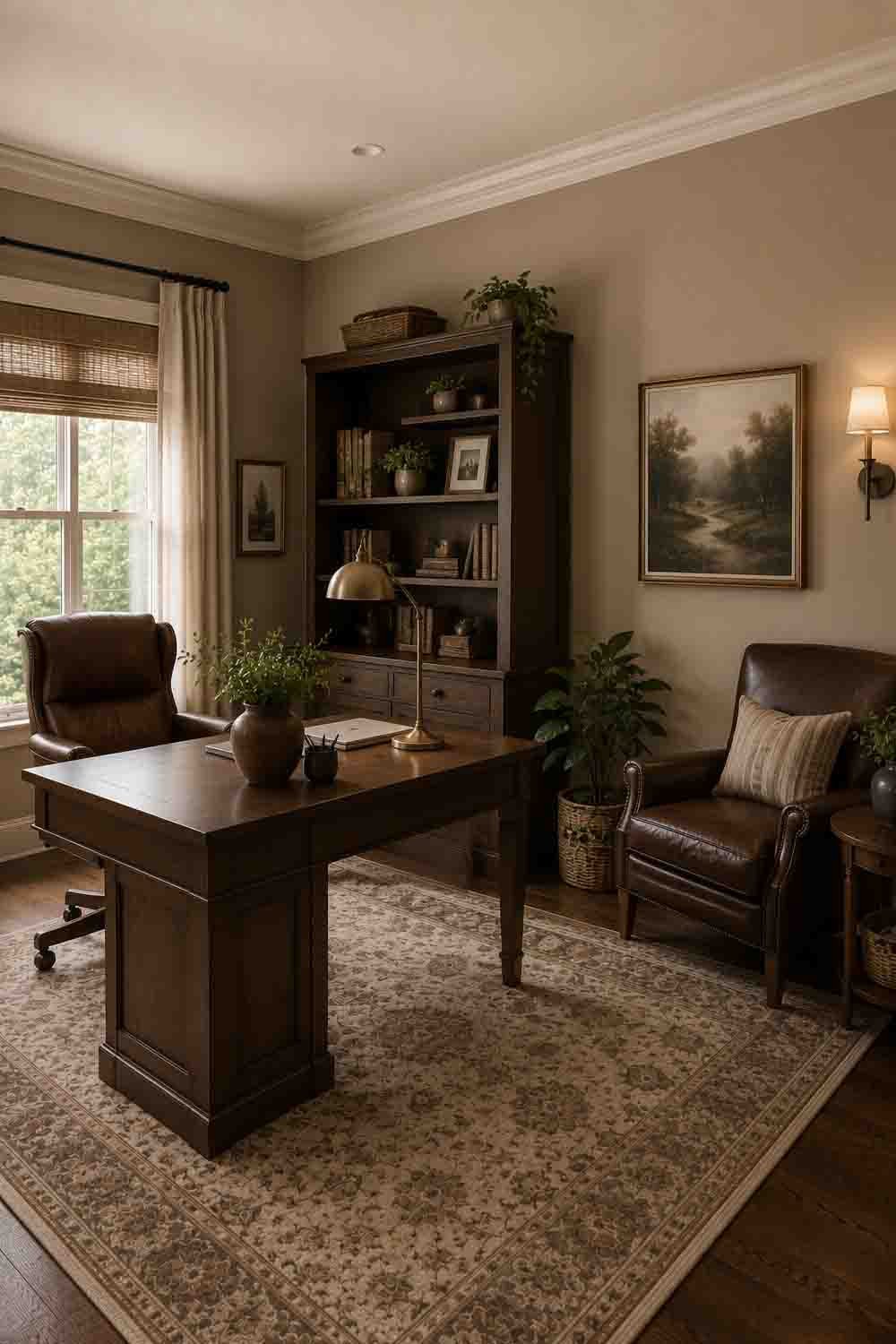
Kilim Beige is a true, warm beige — warmer and more intense than many of its peers, with no cool undertones to be found. Sherwin Williams actually classifies it in the orange family, so depending on your light it can look slightly peachy, though many people don’t notice it at all.
Because its undertones are more noticeable, Kilim Beige “shows up” better in low-light rooms than washed-out lighter beiges. It looks its best alongside warm, medium-toned woods and warm whites — skip the cool whites, which throw off its balance.
Balanced Beige (SW 7037)
If you love the idea of a warm neutral but want one with a bit more meat on its bones, Balanced Beige delivers. With an LRV of 47, it’s a light-to-medium beige that adds real cozy depth to a space — a step beyond your standard builder beige.
Its subtle taupe undertones bridge the gap between icy cool colors and overly golden warm ones, which is exactly where its name comes from. It pairs beautifully with earth tones and even cooler grays, making it a flexible choice for richer, more enveloping rooms.
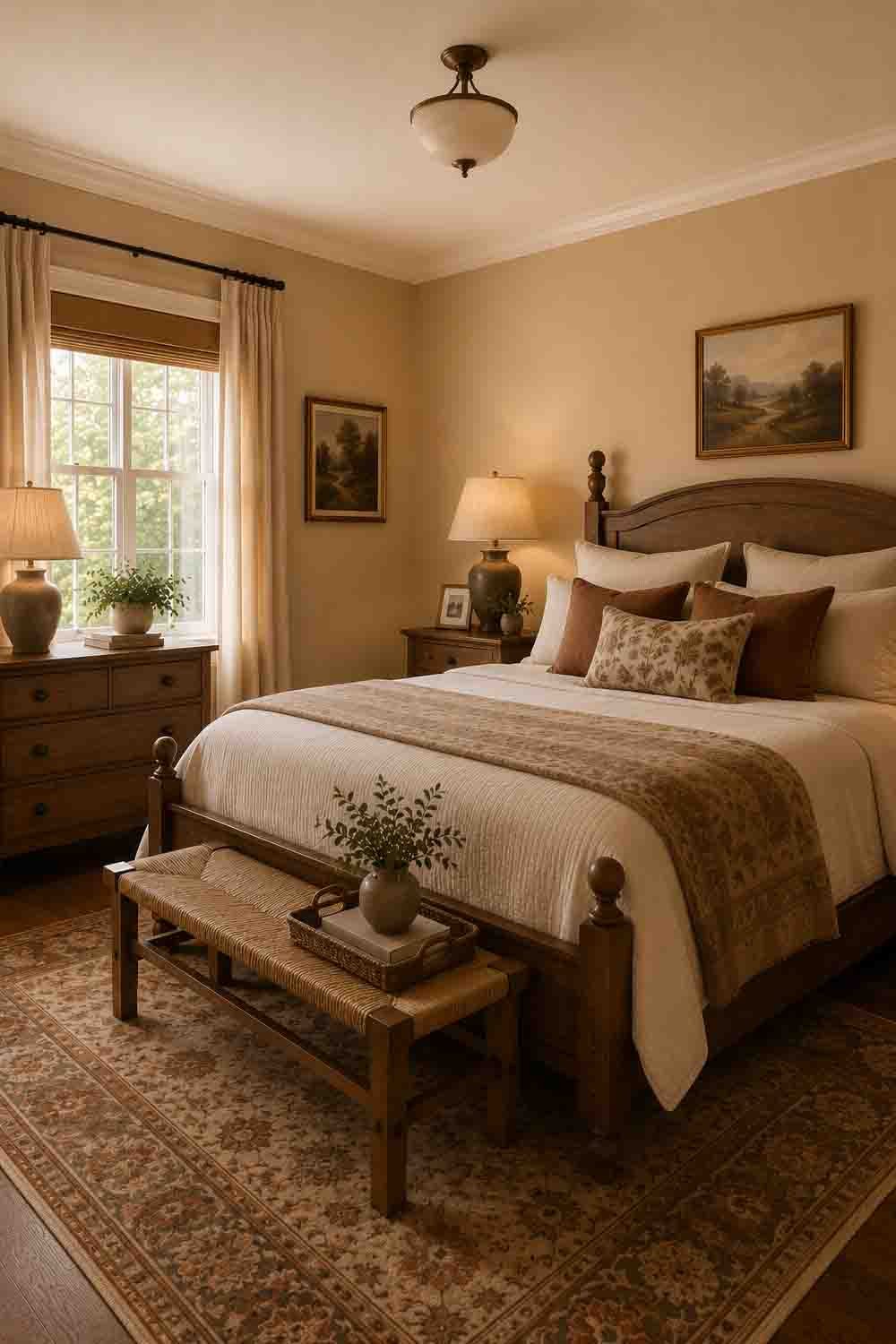
Shoji White (SW 7042)
Shoji White is an off-white that’s risen dramatically in popularity, and it’s no one-trick pony. Its creamy beige undertones (with an occasional wink of green) make it warm without being yellow, and its high LRV of 74 keeps rooms light and soft.
It’s a gorgeous choice for color-drenching — painting walls, trim, and ceilings the same soft tone for a serene, monochromatic look. It’s also become a favorite for cabinets, especially as non-white cabinetry trends gain ground.
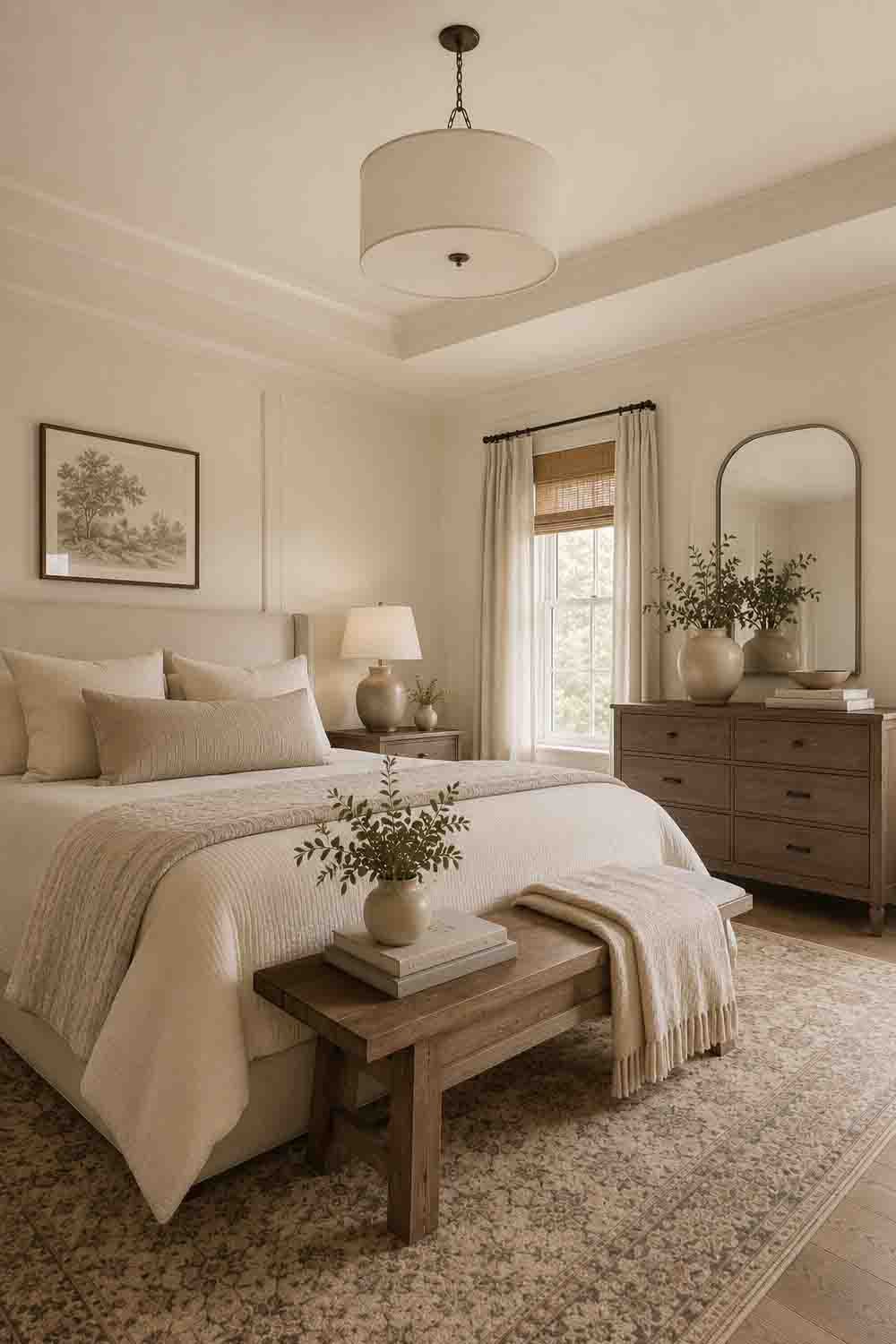
Natural Tan (SW 7567)
Natural Tan looks almost like a lighter, softer cousin of Accessible Beige. With an LRV of 65, it’s noticeably brighter, which makes it a smart pick if you love the greige-beige family but worry that Accessible Beige might read too dark in your space.
It sits in that sweet spot — light enough to keep a room airy, warm enough to feel cozy. It’s an easy, low-risk neutral for bedrooms, hallways, and rooms that don’t get a flood of natural light.
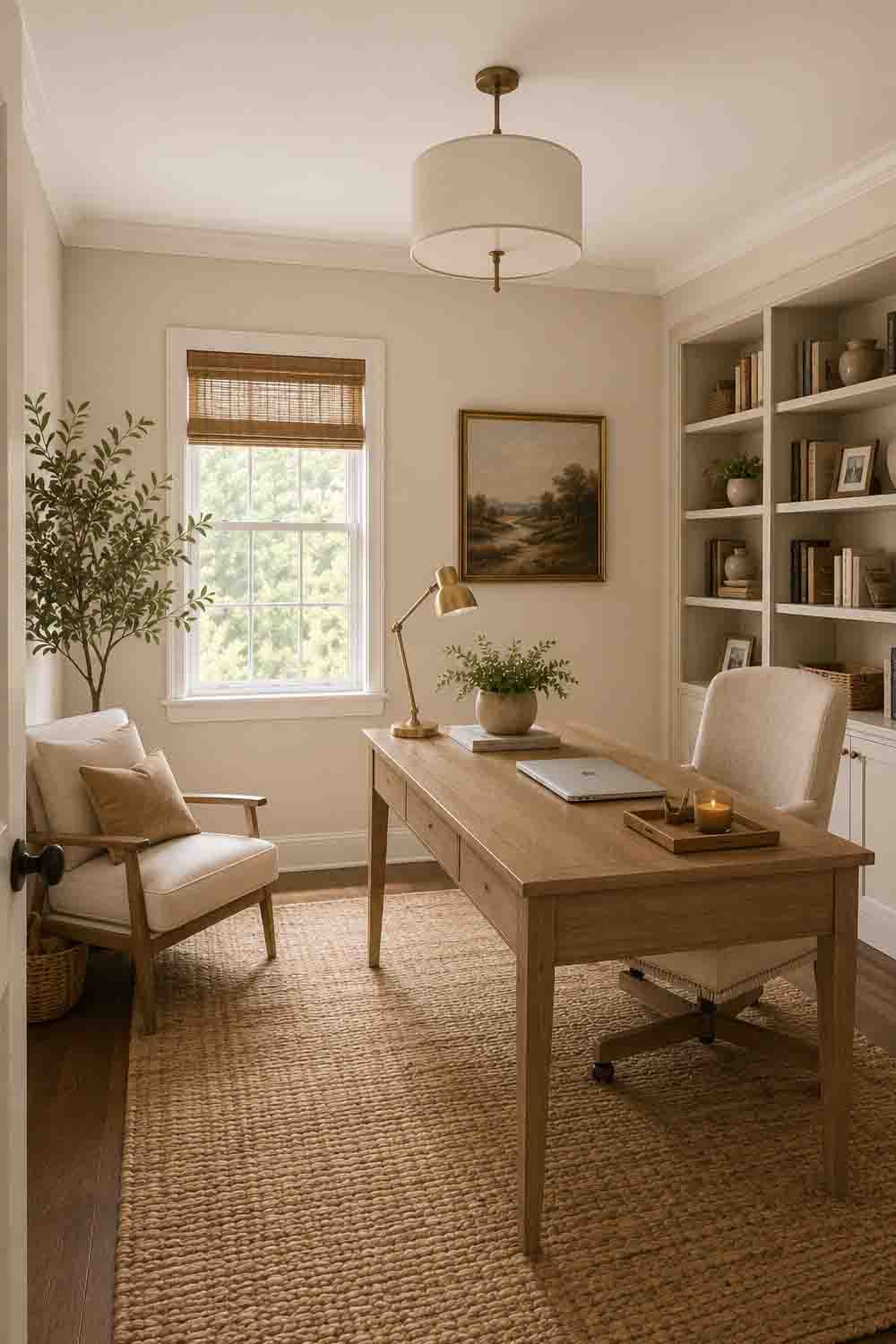
Worldly Gray (SW 7043)
Worldly Gray is a greige — a gray with a warm beige undertone — that lands in that versatile mid-LRV range designers love for an airy-but-not-washed-out feel. It’s a close relative of Agreeable Gray but reads slightly deeper and a touch warmer.
It’s a fantastic transitional neutral, bridging warm and cool finishes in the same space. If your home has a mix of wood tones, grays, and warm textiles, Worldly Gray quietly ties everything together.
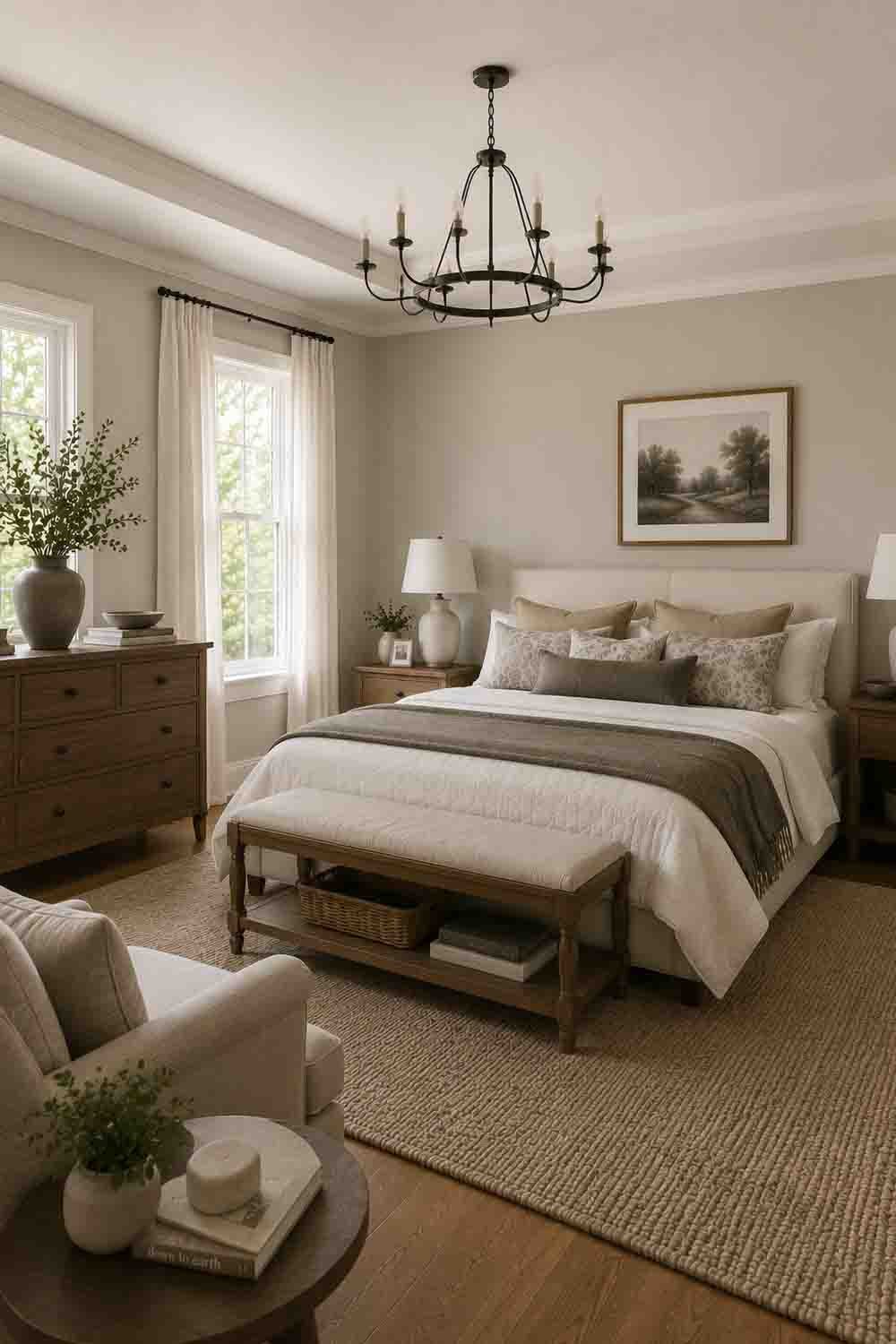
Macadamia (SW 6142)
Macadamia is a deeper, brownish beige with golden warmth and a slight gray undertone that keeps it grounded. At an LRV of 49, it sits right in the middle of the scale — not light, not heavy — giving rooms a rich, enveloping coziness.
It pairs especially well with blues and greens, or with earthy red-oranges and soft whites. In a sunny south-facing room it warms up and leans beige; in dimmer spaces, swatch carefully, since darker beiges can occasionally look dingy in low light.
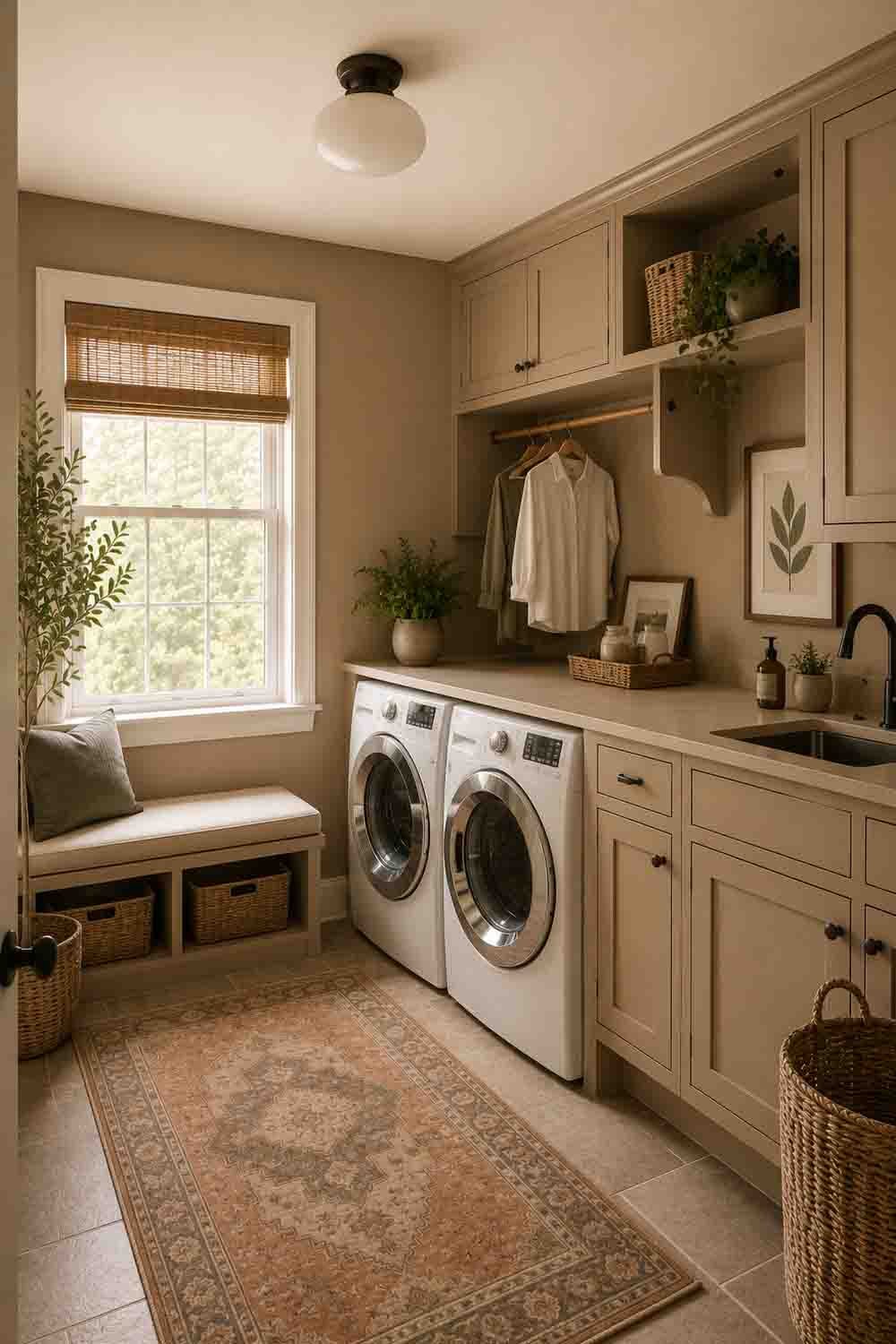
Neutral Ground (SW 7568)
Neutral Ground is lighter, cooler, and a little less gray than Accessible Beige, landing somewhere in an oatmeal greige zone. With a high LRV of 70, it reflects plenty of light and keeps rooms feeling open and bright.
It’s the kind of soft, do-no-harm neutral that works almost anywhere, which makes it a popular whole-home and rental-friendly choice. If you want warmth without much color commitment, this gentle oatmeal tone is hard to beat.
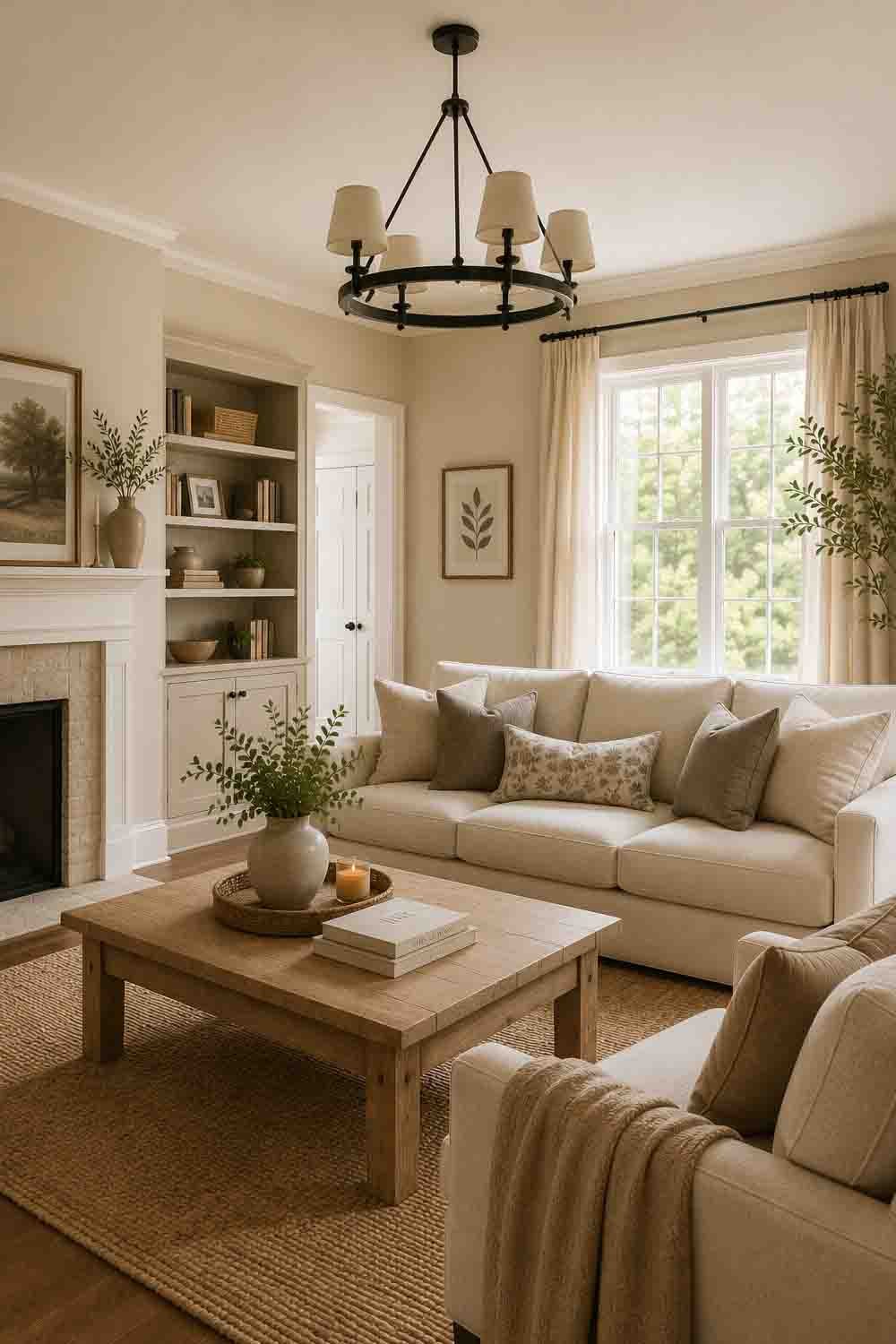
Softer Tan (SW 6141)
Softer Tan is often described as a true tan — clean and warm without the strong pink or yellow that some beiges carry. With an LRV of 60 it’s a touch lighter than Kilim Beige, but shares a similar inviting warmth.
It looks especially good paired with warm white trim and medium-toned woods, making it a natural fit for cozy, classic interiors. If Kilim Beige feels a little too intense for you, Softer Tan is the gentler alternative.
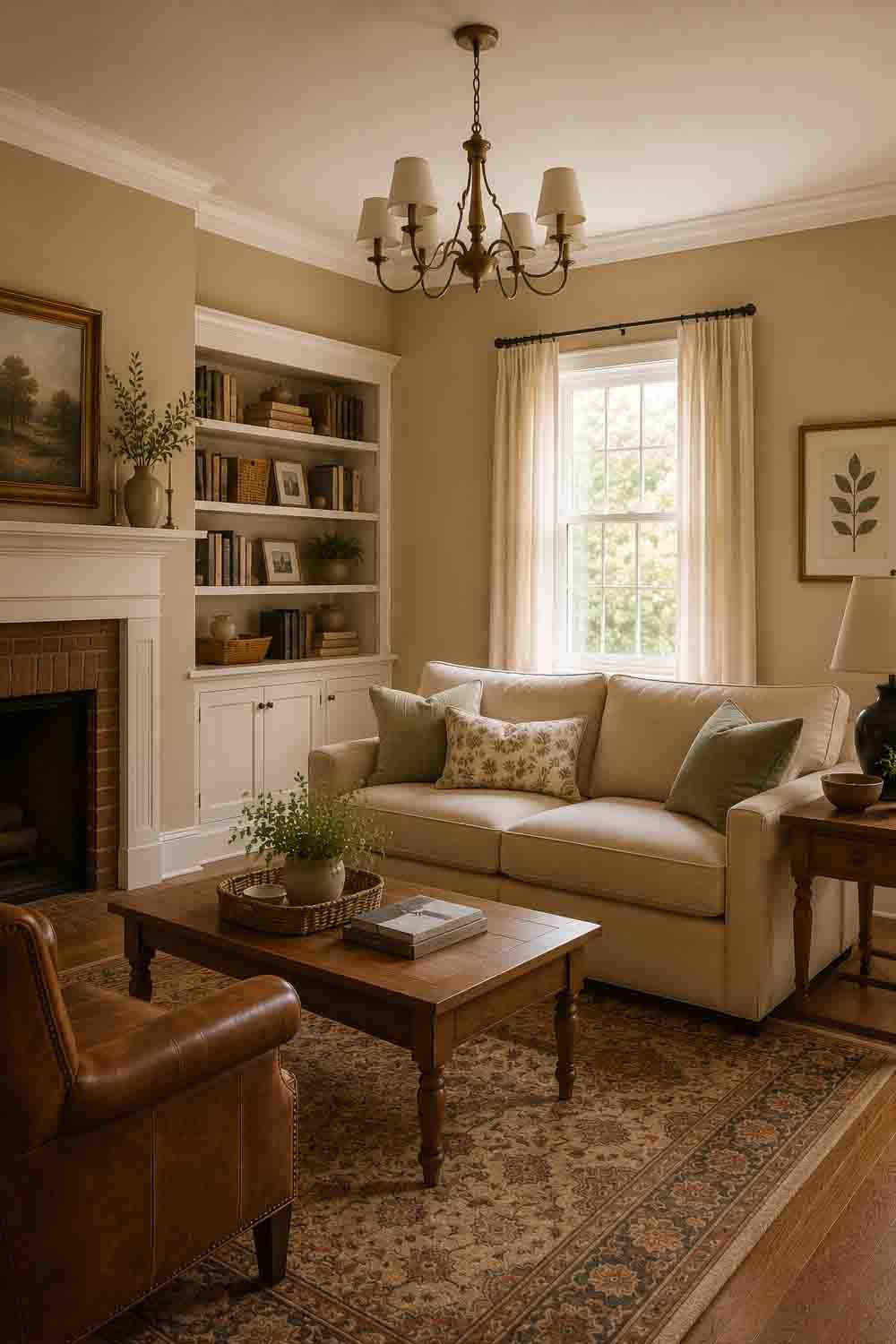
Modern Gray (SW 7632)
Don’t let the name fool you — Modern Gray is more of a warm greige than a true gray. It reads lighter and warmer than Agreeable Gray, with a faint taupe undertone that gives it a soft, almost cashmere quality on the wall.
With an LRV of 62 it keeps rooms light and gentle. Just be sure to sample it, as its subtle warm undertones can occasionally lean a little taupe-violet under certain artificial lighting. In warm natural light, though, it’s beautifully cozy.
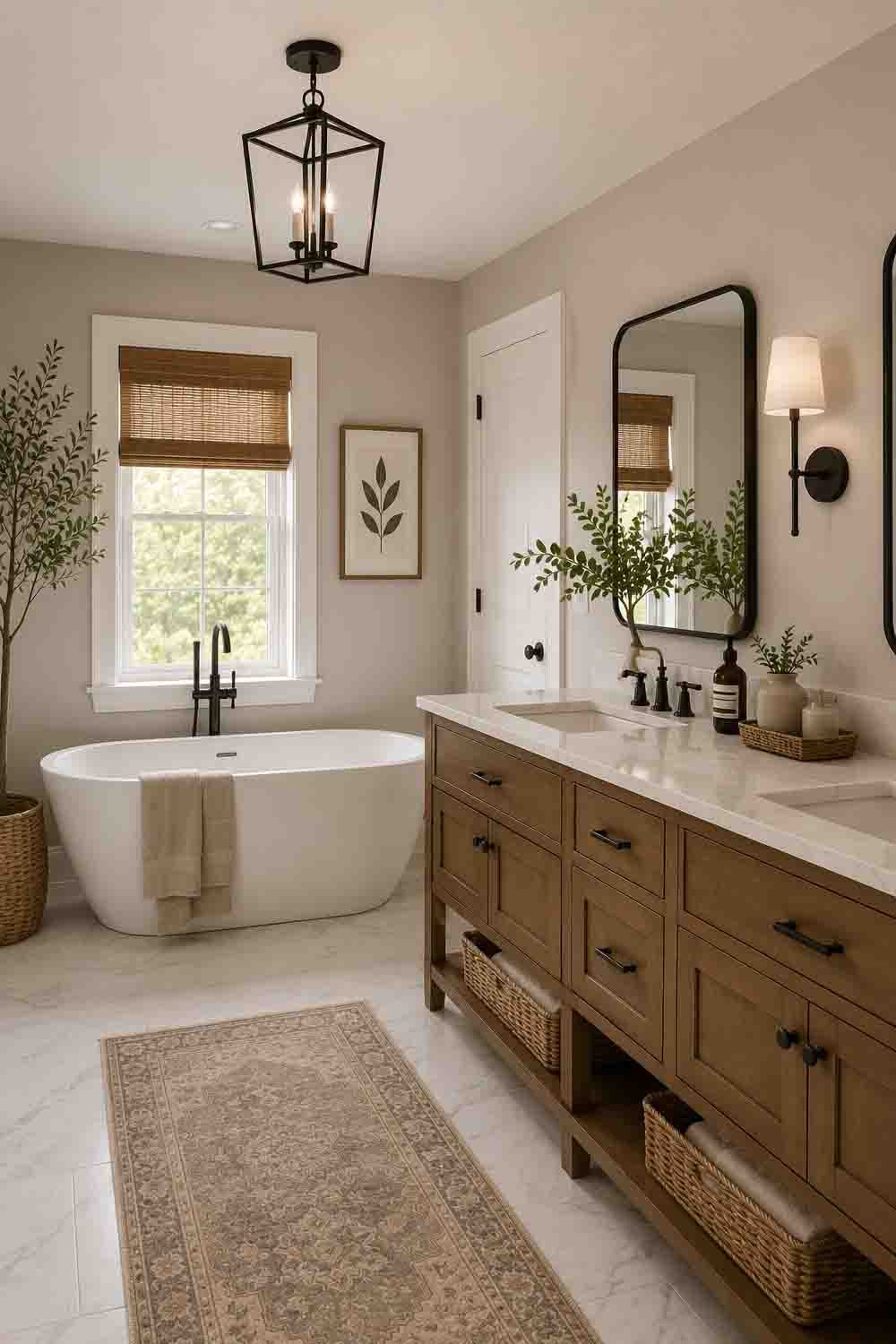
Shiitake (SW 9173)
Shiitake is a warm taupe neutral with a lower LRV that gives it more presence on the wall than the lighter beiges on this list. It reads a little darker and richer, making it a wonderful choice when you want cozy contrast rather than a barely-there backdrop.
It works in the same family as Accessible Beige but brings deeper taupe undertones, so it’s lovely on an accent wall, a built-in, or cabinetry paired with a lighter neutral elsewhere in the room.
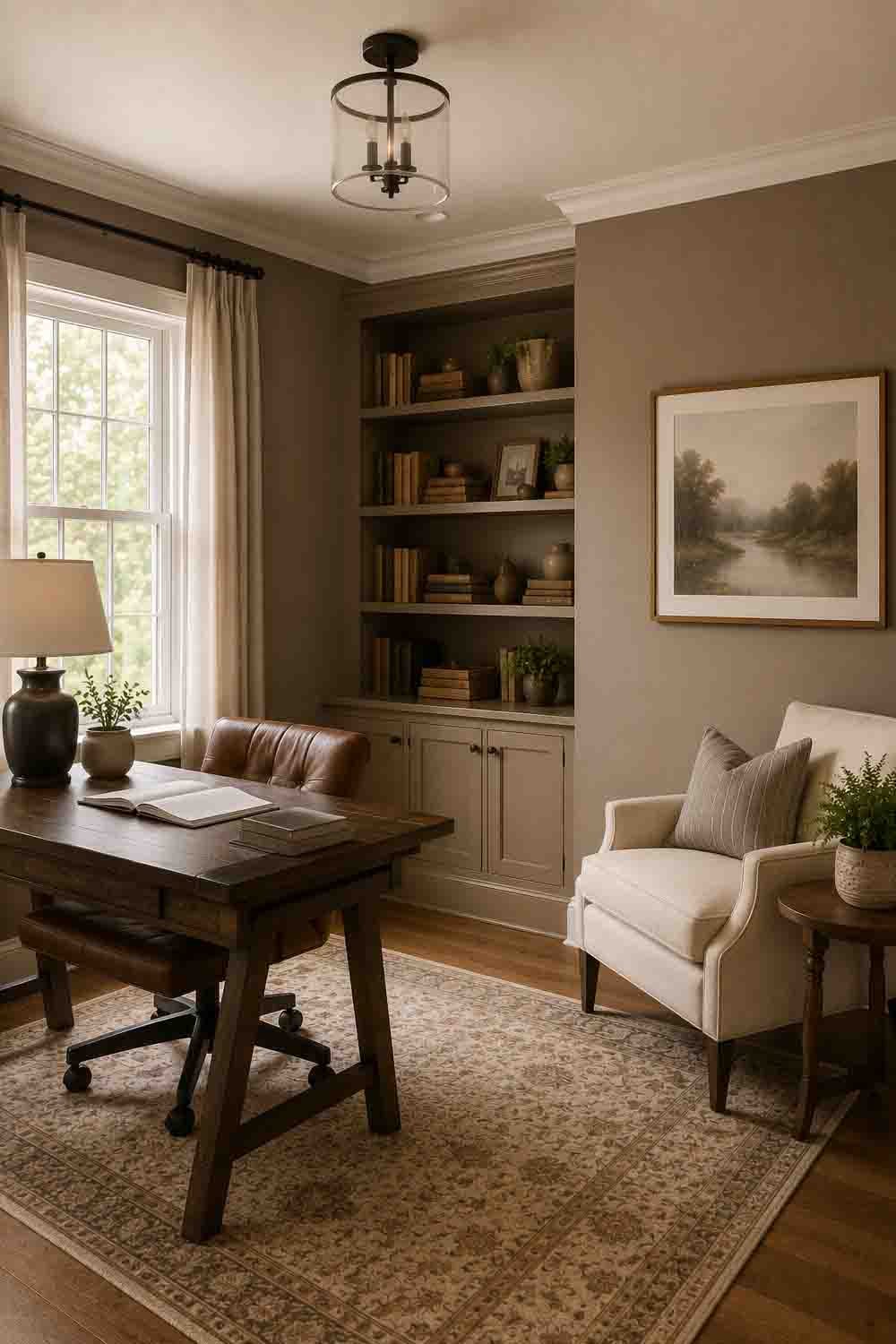
Drift of Mist (SW 9166)
Drift of Mist is a soft, light greige that provides enough light reflection to make a space feel expansive and inviting — which is exactly why it’s recommended for north-facing rooms that need a little help staying bright.
At an LRV of 69 it’s airy and gentle, with just enough warmth to avoid feeling cold. It’s a beautiful soft-neutral backdrop, whether you’re pairing it with cooler coastal colors or warmer woods and linens.
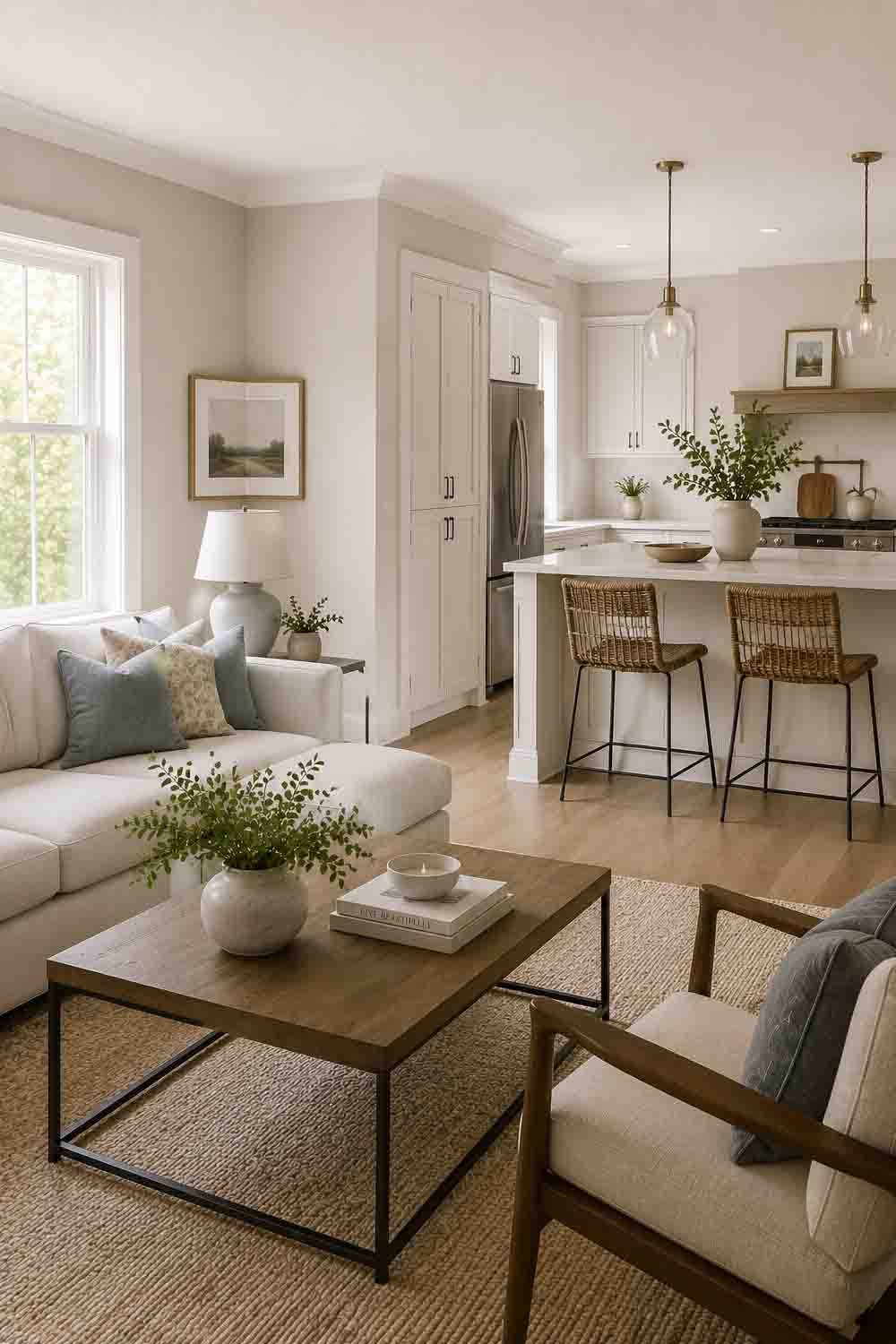
Gossamer Veil (SW 9165)
Gossamer Veil offers a similar greige balance to Accessible Beige but with a higher LRV, making it the perfect pick when you love that warm-greige tone but find Accessible Beige a little too dark for your space.
It’s soft, warm, and forgiving, sliding easily between warm and cool finishes. Designers often suggest it as the lighter, breezier sibling in the greige family — cozy, but with a bit more lift.
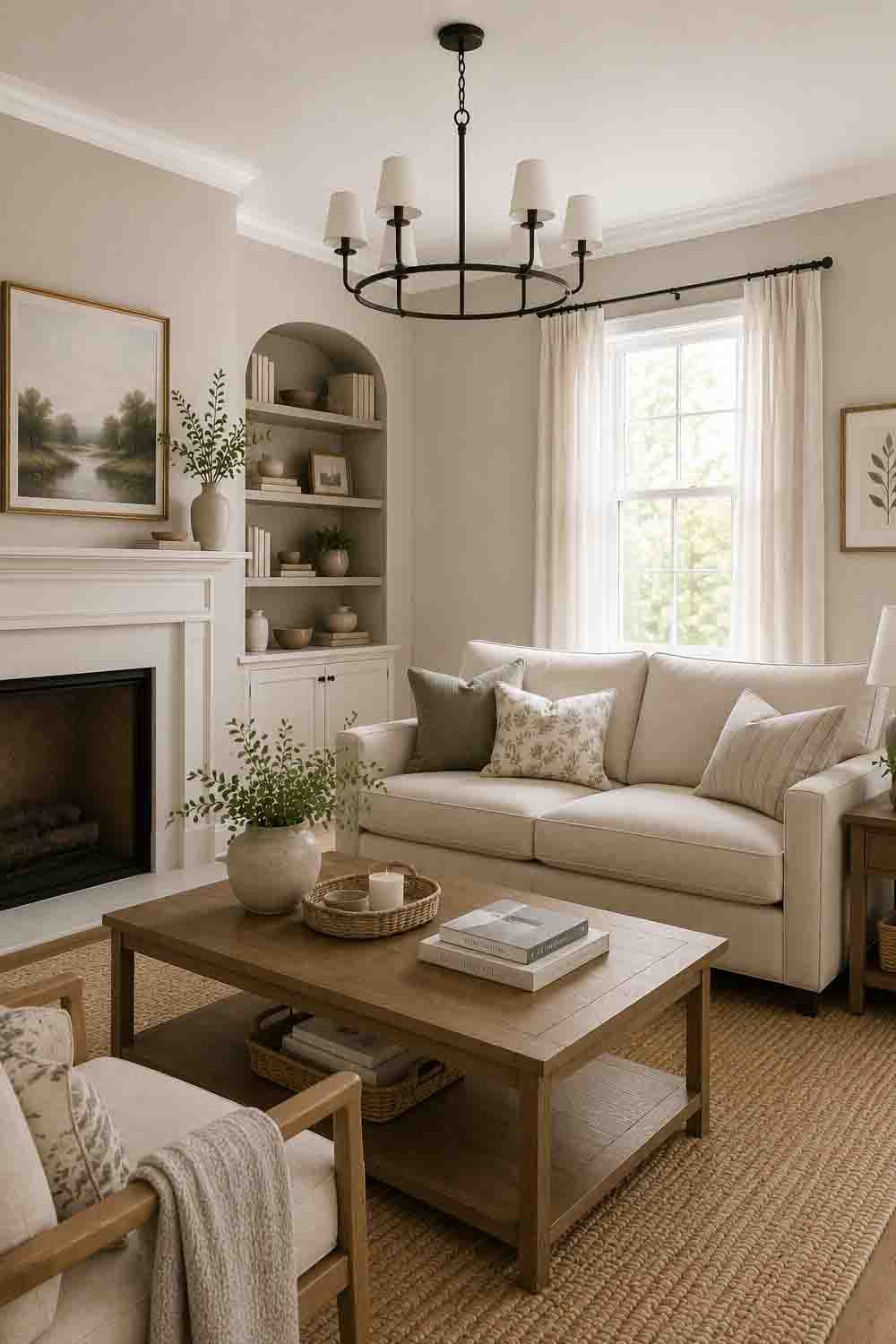
Pure White (SW 7005)
Not every cozy neutral has to be beige. Pure White is a soft white with just a hint of warmth — crisp enough to feel clean, but never cold or sterile like a stark bright white. It’s one of the most popular trim whites in the country.
It’s the perfect partner for almost every color on this list, framing warm neutrals on trim, doors, and ceilings without fighting them. Used on its own, it makes for a soft, livable warm-white wall.
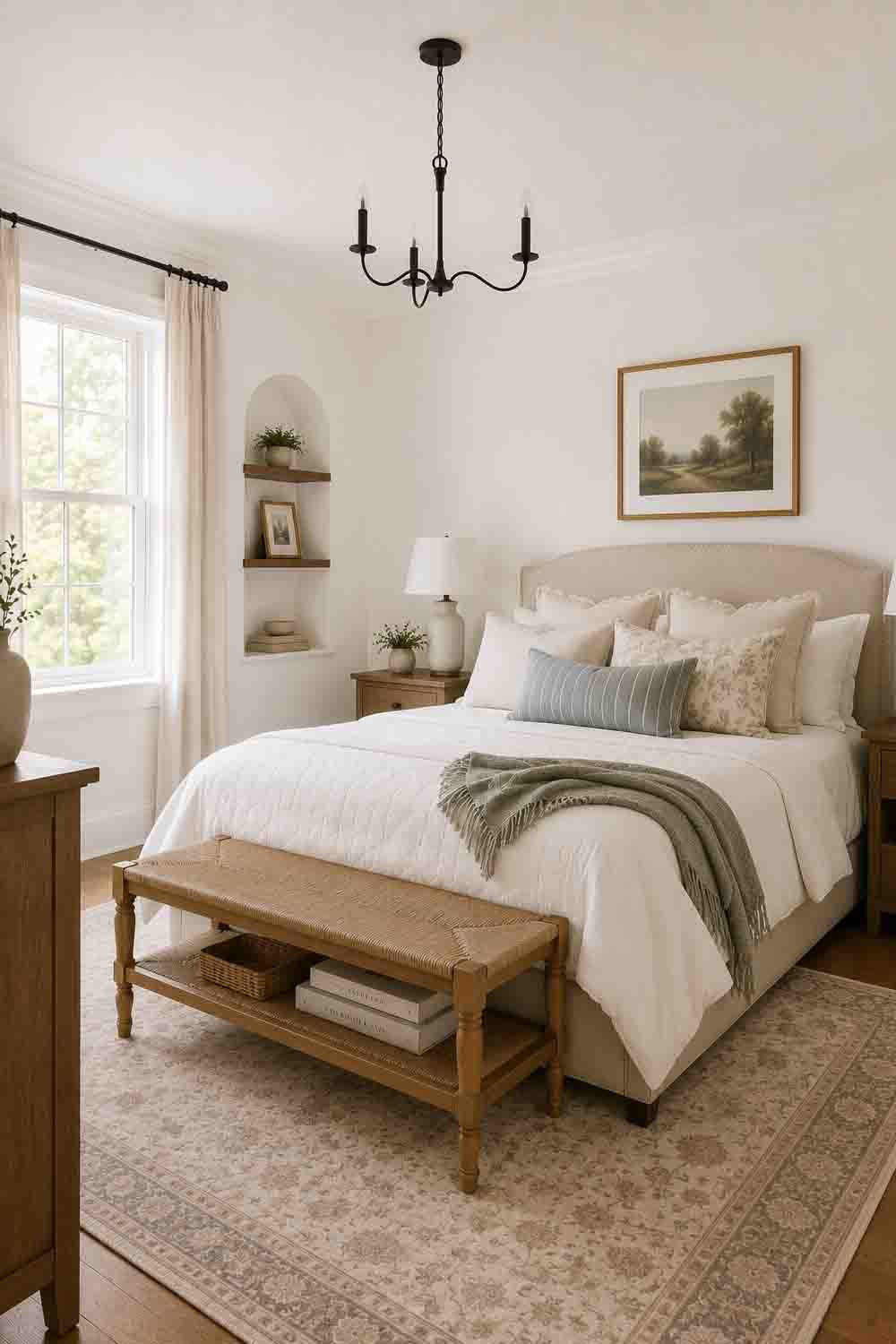
Alabaster (SW 7008)
A former Sherwin Williams Color of the Year, Alabaster is a warm, creamy off-white that feels soft and welcoming rather than cold. Its gentle warmth makes it one of the coziest whites you can put on a wall.
It’s a dream for color-drenching, trim, and ceilings, and pairs beautifully with the warmer beiges and greiges on this list. If you want a white that still feels like a warm neutral, Alabaster is the one to sample first.
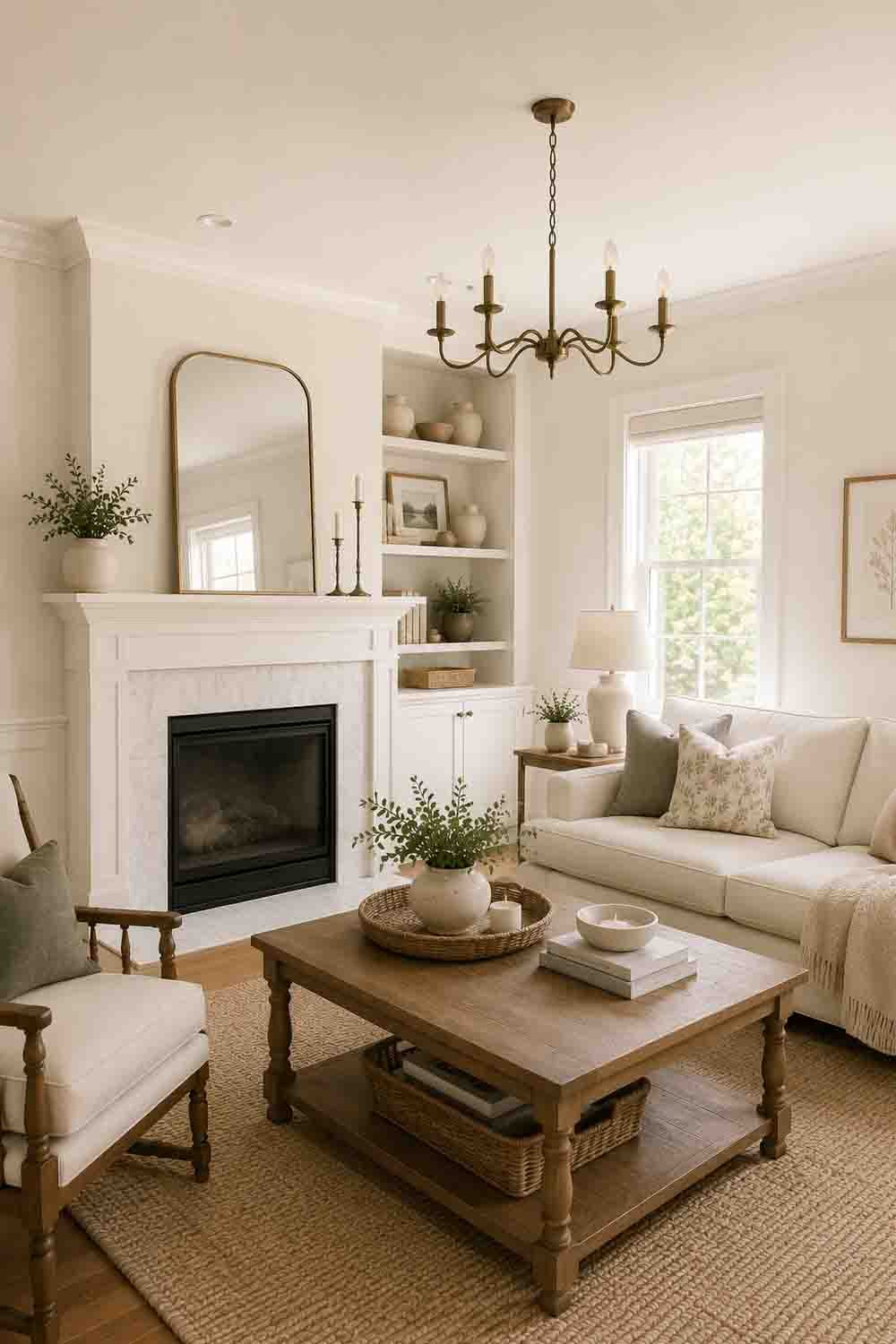
How to Choose the Right Warm Neutral for Your Room
With 17 gorgeous options, narrowing it down comes down to a few simple questions:
How much natural light do you get? Dim or north-facing rooms love higher-LRV warm neutrals (Natural Linen, Neutral Ground, Drift of Mist) that bounce light around. Bright south-facing rooms can handle deeper, cozier shades like Macadamia, Shiitake, or Balanced Beige.
Do you lean warm or balanced? If you want unmistakable warmth, reach for the true beiges and tans — Kilim Beige, Softer Tan, Natural Linen. If you want warmth that stays neutral and flexible, the greiges — Accessible Beige, Agreeable Gray, Worldly Gray, Gossamer Veil — are your friends.
What are your fixed finishes? Match your neutral to the undertones in your floors, countertops, and trim. Warm woods love warm beiges; cooler grays and stones play nicely with greiges.
Frequently Asked Questions
What’s the difference between a beige and a greige?
A beige is a warm neutral built on brown/orange undertones with no gray, like Kilim Beige or Natural Linen. A greige is a gray that’s been warmed up with beige undertones, like Accessible Beige or Agreeable Gray. Greiges tend to feel a bit more modern and flexible, while true beiges feel warmer and cozier.
Which Sherwin Williams warm neutral is best for a whole house?
Accessible Beige and Agreeable Gray are the most popular whole-home warm neutrals because they hold up well across rooms with different lighting. For a lighter, airier whole-home look, Natural Linen and Neutral Ground are excellent choices.
What’s the best warm neutral for a dark, north-facing room?
North-facing rooms get cooler light, so a warm neutral with a higher LRV (60+) helps counteract it. Natural Linen, Drift of Mist, and Neutral Ground are great options that keep a dim room feeling bright and warm.
What white trim goes best with warm neutrals?
Pure White and Alabaster are the two most popular Sherwin Williams trim whites for warm neutrals. Both carry a soft warmth that complements beiges and greiges without clashing. For true beiges like Kilim Beige, lean toward a warmer white and avoid cool, blue-based whites.
Are warm neutrals still in style?
Absolutely. Design has shifted away from flat, cold grays toward “organic neutrals” — warm beiges and greiges that add depth and make a home feel layered, cozy, and expensive. Warm neutrals are firmly back in fashion and show no sign of leaving.
Final Thoughts: Your Coziest Room Starts Here
The beauty of a warm neutral is that it works quietly in the background, making everything else in your room — your furniture, art, textures, and the people in it — look and feel better. Whether you’re drawn to the foolproof flexibility of Accessible Beige, the creamy glow of Natural Linen, or the rich depth of Macadamia, there’s a cozy Sherwin Williams neutral on this list for you.
Just remember the golden rule: sample before you commit. Lighting changes everything, and the right neutral in your space will reward you with a home that feels warm and inviting every single time you walk through the door.
📌 Loved These Colors?
Pin this post so you can come back when you’re ready to paint — and share it with a friend who’s stuck choosing a color!